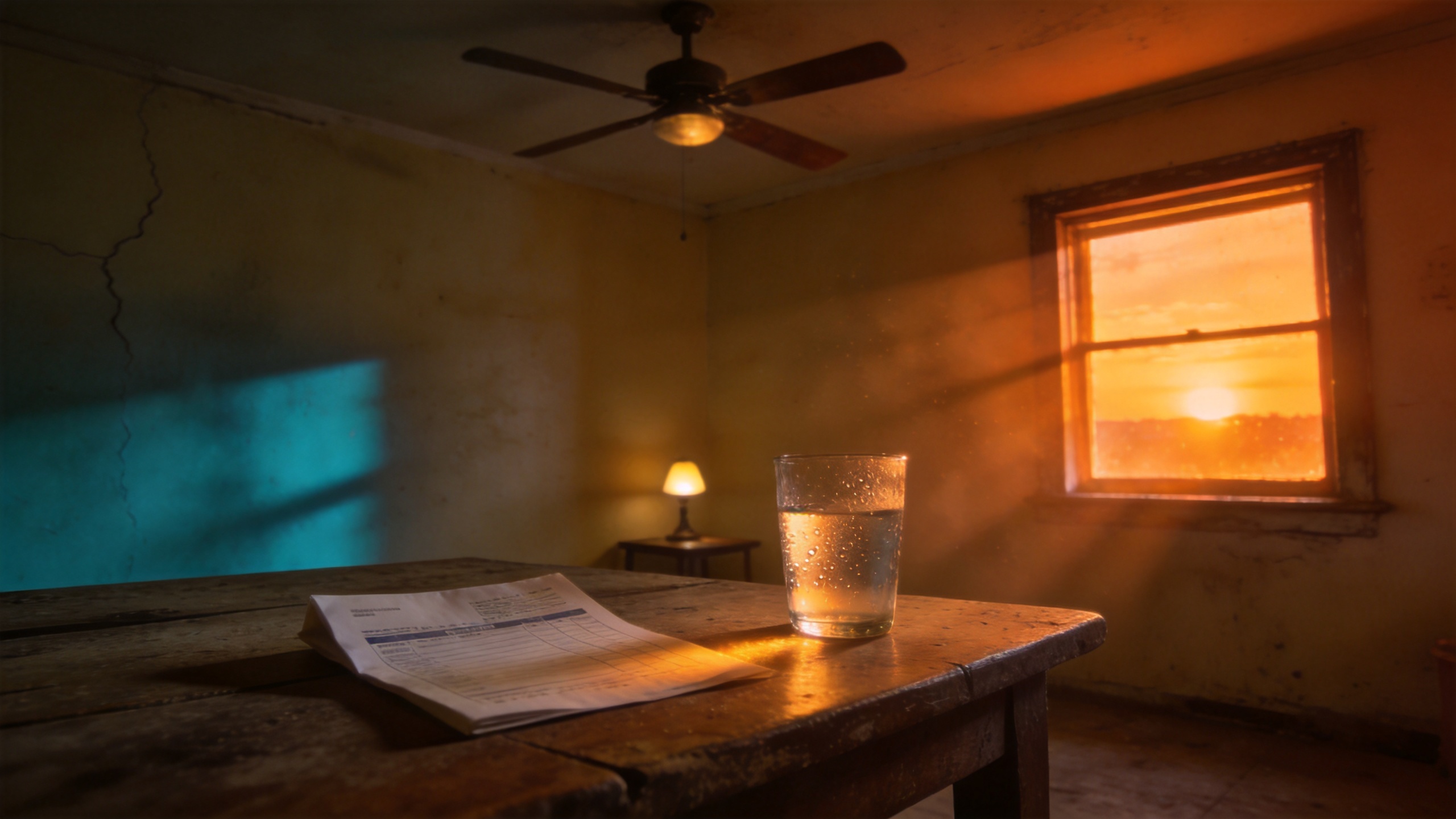
Some Summers, the Bill Is Heavier Than the Heat
By June, the heat in Pakistan stops being weather and becomes a presence. It sits in the room with you. It wakes the children before dawn. It keeps the walls warm long after the sun has gone down. And just when the month feels survived, the bijli ka bill arrives — and for many families, that thin envelope is heavier than the heat itself.
We talk about the heat freely. We compare load-shedding hours with the neighbours, forward the weather warnings, complain about the humidity. But the quiet arithmetic that comes with the summer bill — which comfort to ration, which bill to pay first — that part most families carry alone, in silence.
Here are four moments anyone who has lived through a Pakistani summer will recognise.
1. The Envelope
It is the end of the month. The bill is in your hand, and the number at the bottom is higher than last month — higher than you let yourself expect. You read it twice. The units, the fuel adjustment, the taxes you did not choose — all of it adds up to a figure that does not fit the space you had left for it.
Nothing in the house changed. The same fans, the same fridge, the same two rooms. Only the season changed, and the meter ran faster in the heat. You fold the bill and set it on the table, next to a glass of water already going warm. You will deal with it. Just not in this minute.
2. Three in the Morning, and the Fan Stops
The worst moment of summer is not noon. It is 3 AM, when the load-shedding cuts in and the fan slows, wobbles, and stops.
The room changes instantly. The air goes thick. The youngest one stirs, then sits up, hair stuck to the forehead, and you are already awake because you never fully slept. You pick up a hand-fan, or a folded newspaper, and you move the air for them the old way — the way your mother did for you. You count the minutes until the power returns. Forty, maybe ninety. The child drifts off again. You keep fanning a little longer than you need to, just to be sure.
The heat is hard. But the part no one photographs is this — a parent awake in the dark, moving warm air over a sleeping child, doing the small math of how many such nights are left in the season.
3. The Counter
A few days later you are at the counter — the bank, the Easypaisa shop, the app open on your phone. The electricity bill is due. So is the gas. So is the fee slip from school. They cannot all be paid in full this week, and you know it before you open the wallet.
So you make the quiet decision everyone makes. Pay the electricity in full, because disconnection costs more to undo than to avoid. Pay part of the next one. Let the smaller thing wait a week. It is not a crisis. It is just the second half of the month, arriving early.
4. “Thori Der Baad”
By evening, the house runs on a discipline no one announced. One room with the fan on, where everyone gathers, instead of three rooms half-cooled. Lights off in the empty rooms. The cooler saved for the hottest hour, not the whole afternoon.
The little one asks if you can switch the cooler on now. Thori der baad, you say — in a little while. Not no. Just not yet. They nod and go back to their drawing on the floor, where the tiles are coolest. They are not suffering. They are simply learning, the way you learned, that comfort in summer is something a family spends carefully, together.
What These Nights Have in Common
In all four, no one was careless. You did not run an AC for fun; most homes do not have one. You did not waste. The heat is real, and surviving it costs money — that is not a failure of budgeting, it is the price of a Pakistani summer.
What is heavy is not the heat. Everyone shares the heat. What is heavy is the bill, because the bill is private — the rationing, the priorities, the thori der baad — and you do that part where no one can see.
This is not shame. It is the summer cycle of nearly every salaried family in the country. The problem was never the heat. The problem is that the math is done alone.
What Helps More Than Dread
A few things steady the summer months better than worry:
- Read the bill before you fear it. Check the units, the fuel-adjustment line, and the tax slabs. Meters do fault; if the jump makes no sense against your usage, report it and ask for a check.
- Ask about installments. For an unusually high summer bill, distribution companies sometimes allow it to be split. It is worth one phone call before the due date.
- Pay to avoid penalties first. Disconnection and reconnection charges cost more than the few days you save. If something must wait, let it be the bill without a penalty attached.
- Small load discipline is real, if modest. LED bulbs, unplugging idle appliances, one cooled room — none of it transforms the bill, but across a brutal month it takes the edge off.
A Word on Bridges
Be honest with yourself about one thing: a loan is not a tool for a bill that comes every month. Borrowing to pay the electricity bill in June, then again in July, then again in August, does not solve the summer — it just adds a new weight on top of the old one, and the cycle tightens.
But summers do not arrive politely, one problem at a time. Sometimes the heat brings a real, one-off emergency on top of an already-stretched month — a child down with heatstroke and a hospital bill, a motor that burns out, an unavoidable repair. If that lands and there is no buffer, a regulated short-term bridge can help you through that — not the routine bill underneath it.
MoneyTap is an SECP-regulated personal loan app for Pakistani residents (licence SECP/LRD/123/ZFSPL/2023-39). You apply with your CNIC and phone number, approval takes about five minutes, and funds reach your JazzCash, Easypaisa or bank account within 12 hours. Loans up to Rs.50,000, with the markup shown clearly before you accept. For genuine bridges — not for the monthly bill.
What to Keep in Mind
- Use it for a one-off emergency, never as a way to pay a recurring bill
- Borrow only what the emergency needs, not the maximum offered
- Have a clear repayment plan from your next salary
- Read the markup terms upfront — we show them first because the summer is heavy enough
The heat will break, the way it always does. The bill will come again next month, the way it always does too. Neither is a verdict on you. Get through the season the way Pakistani families always have — carefully, together, one cooled room at a time.
MoneyTap offers SECP-regulated personal loans for Pakistani residents. Trusted by 2 million+ users. Download the app to check your eligibility in five minutes.