The Morning After Eid Has Its Own Math
The morning after Eid is never loud. The guests have gone. The new clothes are folded. The mehndi has begun to fade. And for the first time in days, the house is quiet enough that you can hear the questions you were avoiding during the celebration.

We don’t talk about this part much. We talk about the preparation — the bakra, the new clothes, the Eidi, the mithai trays. We share festival photos. We say Eid Mubarak a hundred times. But the week that follows — when the wallet is lighter, the salary feels far away, and the bills are now starting to arrive — that week almost everyone goes through quietly, alone.
Here are four moments anyone reading this has probably lived through.
1. The Empty Wallet
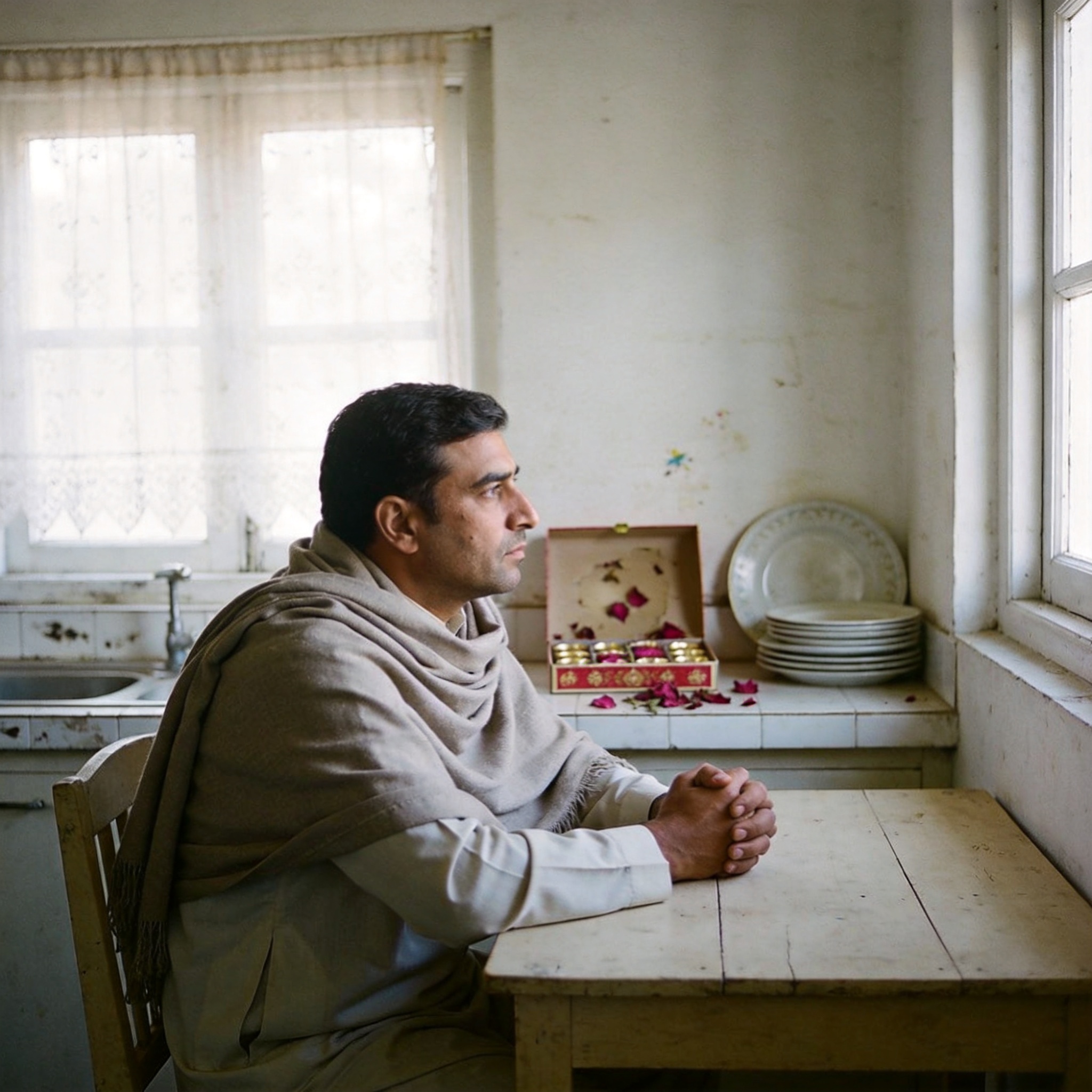
It’s 7 AM. Your wife is still sleeping. You’re sitting alone at the kitchen table, a shawl over your kurta, your hands clasped on the bare wooden surface. You haven’t reached for anything yet — not the phone in the other room, not the unopened envelope on the counter, not the wallet you already know is mostly empty.
The counter still has the mithai box on it, rose petals dried where the sweets used to sit. The plates are washed and stacked. Yesterday everything felt full. This morning, everything feels like leftovers.
Outside the window, the daylight is just starting to come in — pale, even, not promising anything yet. You watch it instead of doing anything else. Bank SMS notifications buzzed through your phone last night. The numbers can wait another hour. So can the envelope. So can the wallet.
The fever isn’t the worst part. Neither is the empty wallet. It’s the silence in which you count the days until your next salary.
2. The Fridge Glow
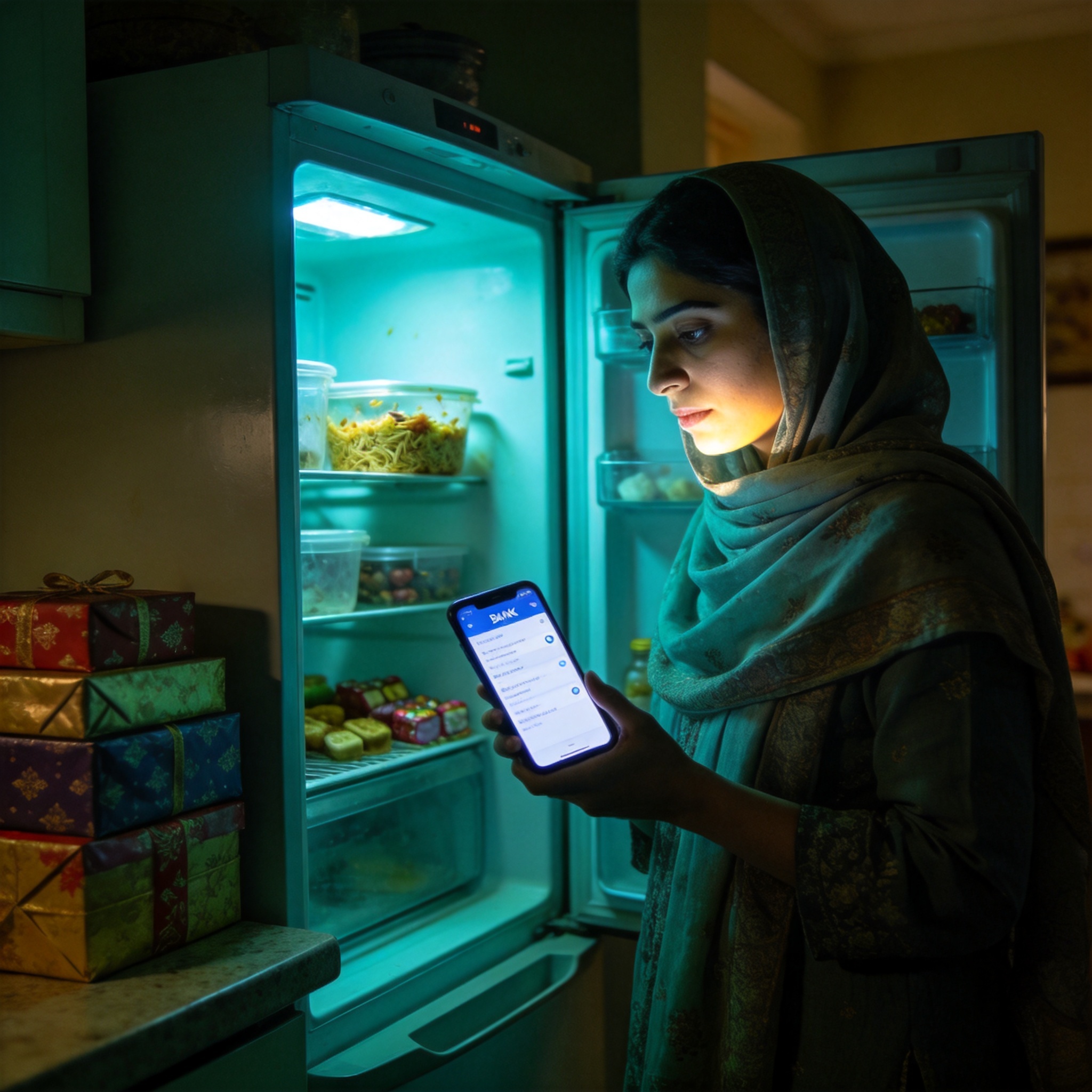
Mid-afternoon. You opened the fridge. Third-day biryani, still half a container. Two mithai boxes, still ribbon-tied — no one had the heart to open them. Wrapped gift boxes still stacked on the counter where they were placed three days ago.
Your phone is in your other hand. The bank SMS is right there, waiting. The electricity bill, the gas bill, the tuition center text about your daughter’s books — all due this week.
The cold blue fridge light falls on your face. It isn’t celebratory light. It’s what now light.
You close the fridge. Everything is still there — both the festival leftovers and the math of the rest of the month.
3. The Drawer

Evening. The credit card statement arrived today. You haven’t opened it. You already have a rough idea of what it says.
You opened the drawer of your desk, reached behind some old papers and a notebook, and slipped the envelope to the back. You don’t want to look at it tonight.
Your wife is making chai in the other room. She won’t ask — not yet. But you know she knows. She always knows.
Hiding isn’t a solution. But tonight, it’s enough. Tomorrow morning you’ll open it. Maybe the day after.
4. The Fourteen Days
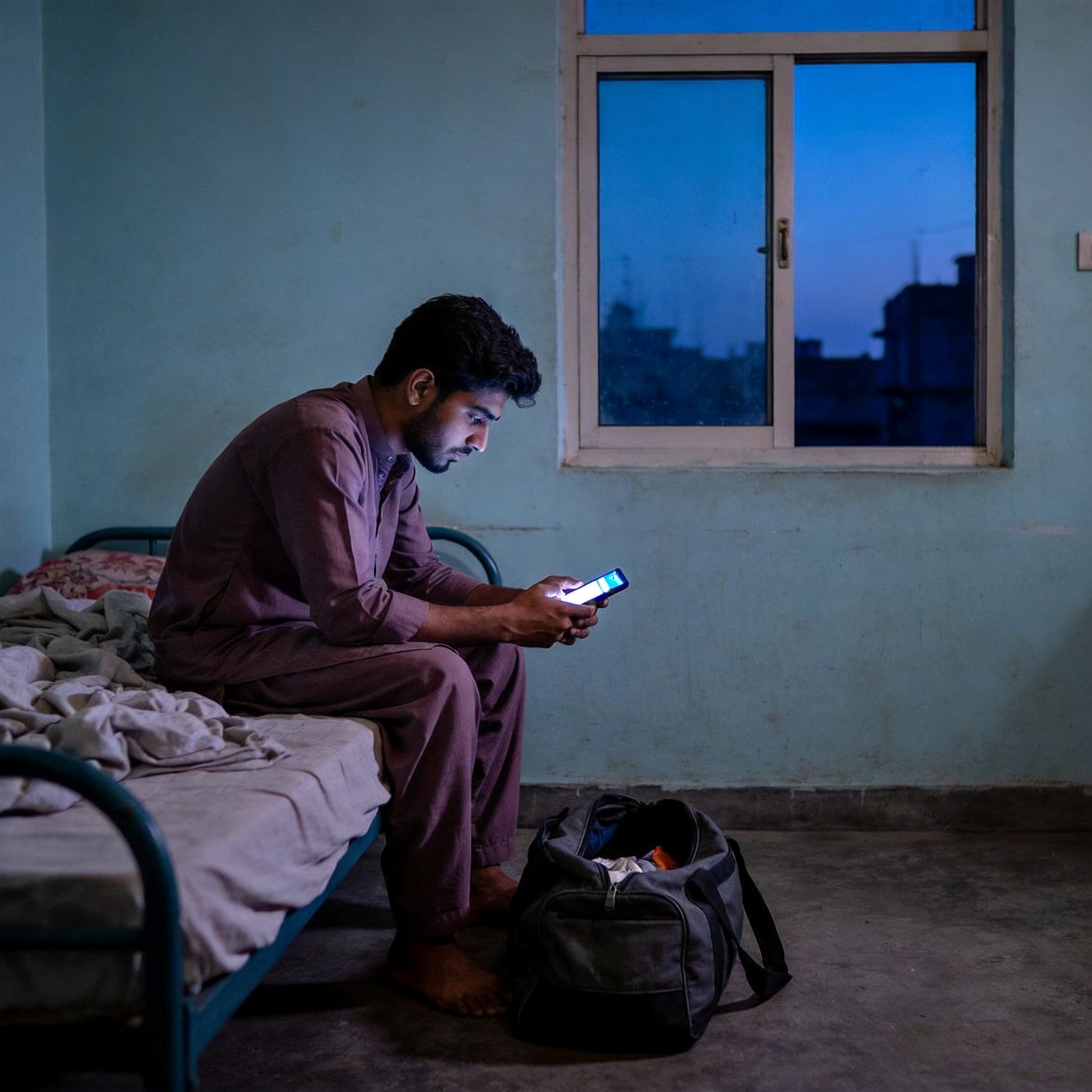
Sunday, 9 PM. You’ve just gotten back to your city flat, half-unpacking a duffel bag. The sky outside the window isn’t bright anymore — just cool blue.
You opened your phone, opened the banking app. The balance is what you expected. Eidi to cousins’ kids in the village. New clothes. Bus fare both ways. Gifts for the family on the way back.
Fourteen days until salary. You’ll make it — you always make it. But when colleagues invite you to biryani at the office on Friday, you might say “yaar, ghar ka khana kha raha hoon today.” You’ll buy needs at the supermarket, not wants. You’ll skip the small joys.
You’re not in trouble. You’re just tired, again, of making yourself smaller in the second half of every month.
What These Mornings Have in Common
In all four scenes, the spending wasn’t reckless. What you spent on Eid was what Eid asks. Eid is not celebrated cheaply in Pakistan — it is our culture, our tradition, our pride. The expense was the festival, not a mistake.
What’s expensive is everything after — the week of accounting nobody else sees, the recovery math you do alone, the small private decisions about which joys to skip for the next two weeks.
This isn’t shame. It’s the annual cycle of every Pakistani salaried family. The problem isn’t the festival. The problem is that the recovery is done in silence.
What Works Better Than Panic
Four small steps to make the post-Eid stretch lighter:
- Don’t open the bills for the first 48 hours unless you already have a plan. Mental energy first, math second.
- Write a 30-day reset plan on a single sheet of paper — essential bills, food, transport, and defer for everything else. Plain and short.
- Talk to your spouse openly if you share the household budget. One person’s math is two people’s halved burden.
- If a real bridge is needed (medical, school deadline, urgent home repair) — evaluate. Keep the line clear between want and need.
A Different Kind of Bridge
A short-term loan is not a solution for “catching up” on Eid spending. Borrowing just to refill what the festival drained tends to push the problem one month forward — and the cycle continues.
But if a real emergency arrives during this stretch — a child’s medical bill, a school deadline, an unavoidable repair — and you don’t have a buffer, a regulated loan can be a bridge.
MoneyTap is an SECP-regulated personal loan app for Pakistani residents (license SECP/LRD/123/ZFSPL/2023-39). You apply with your CNIC and phone number. Approval in 5 minutes. Funds in your JazzCash, Easypaisa, or bank account within 12 hours. Loans up to Rs.50,000. Markup shown clearly before you accept.
But — and this matters — only when the bridge is genuinely needed. The recovery shouldn’t ruin the memory of the festival, but a loan only becomes your friend at the right moment, for the right reason.
What to Keep in Mind
- Borrow only what you actually need, not the maximum offered
- Have a clear repayment plan from your next salary
- Use it for genuine needs — not to pay for the memory of Eid
- Read the markup terms. We show them upfront because this week’s math is heavy enough already
The Eid was worth it. The week after has its own math, and the math is doable. Start with one step.
MoneyTap offers SECP-regulated personal loans for Pakistani residents. Trusted by 2 million+ users. Download the app to check your eligibility in five minutes.